It's been TOO long since I last posted on this blog. It took me quite a while to find a home school groove that worked perfectly for my adorable little family but once I did, I have been loving homeschooling even more!!
As the new school year begins, I find myself preparing for the upcoming year! This year we are trying something new, which my kids are really excited about! I have formed a little home school group that will meet twice a week in 2 hr blocks. I have nick-named it "Our Little Academy" do differentiate it from the non-group days.
It's amazing how the Lord will lead us when we are asking for his guidance...and even when we aren't asking for it in one particular area. Like I stated above, I had got our home school into a wonderful groove that worked perfectly for our family, so I hadn't been inquiring about how to go about this school year. I assumed it would be the same as the last. Then one day while I was at Tae Kwon Do with Gabe, I got to talking with one of the other mothers. It turned out that she was LDS as well, AND a home school mother. Her name was Sheri. As soon as Sheri figured out that I home schooled, she asked if I'd like to be a part of a home school group that she was organizing.
At first, I wasn't sure how to answer because I was completely satisfied with how I had things set up but the thought of having a friend to do it with was definitely appealing. Now Sheri is very...ummmm..."exuberant" when it comes to homeschooling and since I'm a bit of a controller, I cautiously took a step back and didn't jump in head first with a commitment. After our 2 hr conversation, I told her I would definitely consider it but that I'd need to pray about it first.
Over the next couple of weeks, I did a lot of praying. I spoke with Sheri a couple more times. Each time the thought of a group to meet with felt right, very right, but meeting with her, did not feel right. One night, I prayed fervently for an answer about what to do. When I woke up in the morning I had my answer. I went straight to Facebook and asked anyone if they'd be interested in starting a little homeschool group with me. I was so so happy when two ladies from my ward accepted the invitation.
At our first meeting we came up with the topics for each week and who would be teaching each topic...they're going to be like miniature unit studies. We had monthly service projects, library trips and monthly field trips scheduled..."Our Little Academy" was born!
As I began preparing my topics I couldn't help but get really excited about sharing them with the kids. I found a rekindled interest for Pinterest, Oriental Trading, our local libraries and Amazon! Yes, homeschooling is more expensive than public schooling BUT I think it's totally worth it! These are my kids we're talking about...their minds, their futures, their education! In my eyes, they deserve it. They truly are my miracles and I'm thankful I can treat them as such :)
Now, the home school situation didn't work out with Sheri and I but I know for a fact that my loving Heavenly Father brought her into my life to open a new door for me. Not only did she open my eyes to a home school group but she turned me onto Konos, which is an amazing Christian based home school curriculum that works wonderfully with TJEd.
This past month has been truly enjoyable as I've prepared for Our Little Academy, along with preparing Konos for our non-group days. I'm so thrilled to be a part of the home school community and I'm so thankful that I've recognized my ability to educate my children.
The Adversary tried to tell me that I wasn't "qualified" to teach my children, that I didn't have enough "time" to teach my children, and that my kids would struggle "socially" if I removed them from public schooling. OH, HOW SATAN LIES and OH, HOW SO MANY PEOPLE BELIEVE HIM!! I'm just so grateful I don't listen to him and that I don't allow him to discourage me. This is my calling in life and as long as the Lord tells me to keep my precious miracles in my home, I will.
Can I say for certain I'll always home school, no I cannot. Who knows where the Lord will guide me next year, next month, next week? All I know is that this is where He wants me now and this is what He's asking of me. The verse "I know not, save the Lord commands me" comes to mind. I humbly do what the Lord asks of me...."I'll go where you want me to go, dear Lord, over mountain or plan or sea, I'll say what you want me to say, dear Lord, I'll be what you want me to be!"
Since this is a new milestone in our home school journey, I'm hoping to share it with those who are interested. Maybe, somewhere along the way, Our Little Academy will be more than three families...we'll just have to wait and see!!
Here's to a wonderful, exciting new school year!!!
Celeste <3
Here's the link to Konos if anyone else is interested. It's a Christian-based, character building, multi-leveled curriculum that uses unit studies for fun learning activities and it works wonderfully with TJEd. The curriculum books are pricey so I got mine used off of eBay, though I did purchase the timeline new from their site. Questions? Feel free to ask!
Sunday, September 1, 2013

Wednesday, February 29, 2012
Bamboo & TJEd
"Each day we are made increasingly aware of the fact that life is more than science and mathematics, more than history and literature. There is need for another education, without which the substance of our secular learning may lead only to our destruction. I refer to the education of the heart, of the conscience, of the character, of the spirit – these indefinable aspects of our personalities which determine so certainly what we are and what we do in our relationships one with another." (G. B. Hinckley)
I had originally said on Facebook that I was only going to add the link to this wonderful article to my blog but I've decided it's something I would like to be on my blog in complete form. So, I have added the link (below) but I have also copy & pasted the entire article in this post.
Since I am the only one in my area that is doing TJEd in their home, I rely heavily on "internet" inspiration & encouragement. Articles like these are wonderful gifts in my situation. Hopefully soon, the Lord will send another TJEd family my way so we can grow "Bamboo" together!! :)
http://www.tjed.org/2011/03/nurturing-foundation/#more-2725
I had originally said on Facebook that I was only going to add the link to this wonderful article to my blog but I've decided it's something I would like to be on my blog in complete form. So, I have added the link (below) but I have also copy & pasted the entire article in this post.
Since I am the only one in my area that is doing TJEd in their home, I rely heavily on "internet" inspiration & encouragement. Articles like these are wonderful gifts in my situation. Hopefully soon, the Lord will send another TJEd family my way so we can grow "Bamboo" together!! :)
http://www.tjed.org/2011/03/nurturing-foundation/#more-2725
Nurturing the Foundation
8by Kelli Poll
It was the early 1960s. In Grosse Point, Michigan a bold experiment was carried out. Applicants were tested to find those who had intellectual and leadership potential. The parents whose children were turned away became bitter and resentful, while those of accepted applicants carried a new mark of distinction. Five years into the fourteen-year project the researchers tried to stop it. It was a profound failure.
The region boasted a high ratio of brilliant executives. The students were handpicked from this seedbed of success. What happened? The project was to take these specially-selected children and place them in an academic institution at the age of four. This would give them a head start on the academic track. They would become aggressive learners who would surpass the Russians and help America retain its position as leader of the world in every arena. The problem was – it didn’t work. Because of pressure from parents, who still supported the high status project, it continued another nine years.
The expected outcome was well-adjusted children who exhibited strong leadership characteristics and academic success. The actual results were:
 Great structures need great foundations to support them. If the foundation is faulty whatever is built upon it will not be structurally sound or fit for long-term use. A mentor who applies the principles of great teaching, while understanding and supporting normal development, lays a foundation for leadership. Sooner and faster is a Conveyor Belt answer. It has been tried and found lacking. Better answers to the leadership crisis must come from off the conveyor belt.
I believe we learn through study, faith and experience. When I decided to teach my own children, the only information I had to go on were the thoughts of an enthusiastic friend who had been to one homeschool conference and had absolutely no experience. I took my decision to God and explained that my motivation was fear and my purpose was to keep my children safe. There was no reply. So I reconsidered. About six months to a year later I was back on my knees. I wanted to homeschool my children because I loved them and wanted to give them strong relationships with God and family. This time He answered. In my heart I felt the warmth and peace of His Spirit confirming my new plan. I had chosen to do the right thing for my family and had found the right reason.
I began the work of trying to figure out just how to do this and found an advertisement for a boxed curriculum. It came with great references and seemed to guarantee success and security. I was sold on it. My son was only 4 but I wanted to “see” how great this was going to be – so I envisioned it. I imagined my son sitting at the table while I opened the box and handed him his work for the day. He was excited and happily did worksheets. Suddenly, I lost control of the image and the vision changed. I saw a different day not long after – only this time my son was upset and refusing to do his work. I saw myself frustrated and trying to make him do it. It was a battle of wills. The tension was thick and tangible. When the vision was gone I went straight to my knees. I asked God to help me find a way that would work, particularly for strengthening relationships.
Human bonds are built with positive:
So what is “normal” development? The Giant Bamboo plant helps me understand the Phases of development. The Giant Bamboo grows 20-100 feet high, depending on species, and matures into a useful building material. There is a saying about newly planted bamboo:
Relating this analogy to the Phases of Learning, the first year of bamboo growth is Core Phase, the second is Love of Learning and the third is Scholar Phase. The symbiotic relationship of roots and leaves explains how Core and Love of Learning are never finished. They continue to nourish the later Phases and are fed by them in return. What would happen to a plant without its root system? What happens to roots if the plant fails to develop or the branches and leaves are all cut off?
You have probably heard the phrase “head, heart and hands.” In development it should read Hands, Heart and Head. It is through the roots — the hands and heart — that the head is reached. Abstract thinking begins between 12-14 years of age. At that point you can teach straight to the head; in the meantime, those abilities and avenues appear dormant. When you mentor the Core and Love of Learning phases it does not look like much is happening. If you want to see the growth that is taking place you will have to look deep below the surface to see and appreciate it. Building the root system is the foundation work of these phases. This creates the possibility for the tremendous growth of Scholar Phase and beyond.
The main lesson is Character. Learning the family moral code and religious values as guides to discerning the difference between true and false, good and bad, right and wrong and to choose what is right no matter the cost. These lessons do not end in Core phase, but it is certainly the best time to begin, the time to lay the proper foundation.
The method is doing things together: work and play, love and home, stories and songs. These give opportunities for discussing good/bad, right/wrong, etc. Family relationships are the training ground to learn manners, negotiation, service and more.
The Core need is order–structure of time (routines) and space (environment). In general, those in Core Phase like knowing what to expect. This includes a daily rhythm of times for meals, reading, play and work, morning and bedtime routines, family rituals and traditions.
If you are having trouble with little ones being too active when you would like them doing quiet activities, such as while you read aloud or work with older children, consider structuring active time (especially outdoor) before quiet time. I once read an article in a women’s magazine reporting on some recent ADD research. The findings were that ADD kids who spent time outside running and playing were able to focus and pay attention to their work afterward. Many homeschool families report the same result whether it is work, play or exercise. A good Core kid is a tired Core kid.
The main skill to work on in Core actually complements (rather than competes with) character training; that skill is comprehension. Comprehension is the ability to understand, to grasp the meaning. Comprehension is built through hands-on experiences and discussion.
I have a friend who teaches high school math. When she teaches geometry she can tell which students have had hands-on experience with shapes – they are able to comprehend the material while the others struggle with the concepts.
The early years are the time to build up a catalogue of experiences. If you came across the letter combo, “D-O-G,” how great would be your understanding if you had never seen, touched, smelled or played with one?
The main lesson of this phase is Confidence. During this phase there is a strong desire to do things “right”, to be successful at things, but underlying is the desire to successfully navigate life itself. This is why Love of Learners want to know “the rules.” A strong relationship with Dad is especially important in building confidence. The influence of Dad increases as they grow and move into Scholar Phase.
This phase is about their Heart, their feelings, their Love of learning. The main method is to add the Heart to the Hands. They continue to need hands-on activities but they become more purposeful now. In Core phase they imitate a general idea of what they see you do, in Love of Learning phase they notice the differences and they care.
No more scribbling; they want to learn how to really write. Same for other things such as reading, drawing, etc. They have the attention span and interest for lessons, projects and other skill-building activities. They begin to care about and comprehend other people, places and times (past and future) outside their own experience.
Love of Learning is a great time to explore the arts and sciences (including math), history and geography and to explore talents and abilities. As they are exposed to new things they find interests they want to investigate further and are enthusiastic about sharing them. They consider their interests as a part of themselves and they take our responses to those interests very personally.
They need models, positive feedback from you and academic freedom to choose. Their primary models are their parents and older siblings; but now the need may begin to expand. These years often include a search for heroes.
Emulating heroes is a way to learn and follow the rules for a successful life. Biographies of great men and women are appealing at this time because it meets this need for models to follow, and for the “rules” that govern the outcomes in life. A mentor who puts trust in their choices and helps them learn through positive feedback (specific and honest) helps them build confidence in themselves, even when things don’t always work out. Encourage them while keeping the following in mind:
The skills learned in this phase are the basic life and academic skills. But the most important is trying new things. The new things can be books, sports, food, lessons, groups, etc. This does not mean making commitments, just trying. When I was attempting to transition my very visual son from picture books to chapter books all I asked was that he listen to the first chapter. At the end I asked if he wanted to hear more. I read a lot of first chapters until we found the one that worked for him.
About 150 years ago, a religious community was determined to build a structure that would be dedicated to God and His work. With much time and labor they laid a foundation of sandstone, the most readily available material on hand. Shortly after completing the foundation work they covered it over and left it for a few years while they tended to more immediate needs. When the time came to continue the work they uncovered the stones and found them cracked.
This would never do. They intended to build something that would be strong enough to last for generations. They did the only thing they could do under the circumstances: they pulled the stones out and started over. This time they used better quality material — granite blocks — although it increased all costs including time and labor. The price was worth paying; the building still stands and fulfills its purpose generations later.
As we mentor our children we will make mistakes, but they can be corrected in them and ourselves. As adults and parents our work is to uncover the foundation and see if it is good enough to build the work of our lives upon, to carry us forward in the great purpose of our life. Is it the right foundation to help us become whom we are meant to be and to do what we were born to do?
Then comes the painful part: ripping out what is just not good enough and replacing it with a foundation that will last. It is definitely work. It is even more work if you have begun to build on it before recognizing its inadequacies. But the work and agonizing effort are worthwhile, because we are building to impact generations, and the generations of our families will impact others.
ii. Moore, The Successful Homeschool Family Handbook. (Nashville, Tennessee: Thomas Nelson, 1994), p. 62.
iii. Campbell, Ross, How to Really Love Your Child, (Colorado Springs, Colorado: Chariot Victor Publishing, 1992), pp. 95, 132, 134
iv. Bamboo Growth Habit, Mid Atlantic Bamboo
v. Beechick, Ruth, A Home Start in Reading, (Pollock Pines, California: Arrow Press, 1985), p. 4
v. Pudewa, Andrew, “Motivating Boys & Other Kids Who Would Rather Be Making Forts All Day,” Workshop Presentation on DVD or audio download, (www.excellenceinwriting.com)
It was the early 1960s. In Grosse Point, Michigan a bold experiment was carried out. Applicants were tested to find those who had intellectual and leadership potential. The parents whose children were turned away became bitter and resentful, while those of accepted applicants carried a new mark of distinction. Five years into the fourteen-year project the researchers tried to stop it. It was a profound failure.
The region boasted a high ratio of brilliant executives. The students were handpicked from this seedbed of success. What happened? The project was to take these specially-selected children and place them in an academic institution at the age of four. This would give them a head start on the academic track. They would become aggressive learners who would surpass the Russians and help America retain its position as leader of the world in every arena. The problem was – it didn’t work. Because of pressure from parents, who still supported the high status project, it continued another nine years.
The expected outcome was well-adjusted children who exhibited strong leadership characteristics and academic success. The actual results were:
- nearly one-third were poorly adjusted
- 1 of 20 were judged to be an outstanding leader (far below the norm)
- 3 of 4 were considered entirely lacking in leadership. The dropout rate among them was above the norm.
Source: backyardnature.net
I believe we learn through study, faith and experience. When I decided to teach my own children, the only information I had to go on were the thoughts of an enthusiastic friend who had been to one homeschool conference and had absolutely no experience. I took my decision to God and explained that my motivation was fear and my purpose was to keep my children safe. There was no reply. So I reconsidered. About six months to a year later I was back on my knees. I wanted to homeschool my children because I loved them and wanted to give them strong relationships with God and family. This time He answered. In my heart I felt the warmth and peace of His Spirit confirming my new plan. I had chosen to do the right thing for my family and had found the right reason.
I began the work of trying to figure out just how to do this and found an advertisement for a boxed curriculum. It came with great references and seemed to guarantee success and security. I was sold on it. My son was only 4 but I wanted to “see” how great this was going to be – so I envisioned it. I imagined my son sitting at the table while I opened the box and handed him his work for the day. He was excited and happily did worksheets. Suddenly, I lost control of the image and the vision changed. I saw a different day not long after – only this time my son was upset and refusing to do his work. I saw myself frustrated and trying to make him do it. It was a battle of wills. The tension was thick and tangible. When the vision was gone I went straight to my knees. I asked God to help me find a way that would work, particularly for strengthening relationships.
Cornerstones of Great Teaching
I had two key pieces of information to get me started – the first two cornerstones of great teaching – Relationship and Freedom. Cornerstones are used to guide and align the layout of the foundation. These were my criteria, my guides as I began the work of finding a new way of educating. I had been well trained in how to do conveyor belt education – I needed mentors to show me what I could do instead and I found them in books. I searched stores and libraries for books on homeschooling. If the books met my criteria I studied them carefully. A few of my favorite authors were Raymond and Dorothy Moore, John Holt, Ruth Beechick and Charlotte Mason. From them I learned the other two cornerstones – Trust and Individualize. I also learned a key to troubleshooting – the simple things are the most effective.1. Relationship
Relationships are created and maintained on the basis of frequent, consistent, simple and positive interactions. The most important relationship in your home is your marriage. By taking time each day to connect with your spouse and family they will know they are loved and matter to you.Human bonds are built with positive:
- Eye contact–we often misuse this by only using it for reprimands or giving instruction. It is more effective to use it primarily for connecting.
- Physical touch: this can be holding and hugging, a brief pat on the back, or even tousled hair. Boys often prefer roughhousing.
- Focused attention – this includes listening, planned or spontaneous one-on-one time, displays of portraits and artwork, personal letters to them, etc.
- Teaching: after the connection is built with eye contact, physical contact and focused attention, the child is open, trusting and ready to be taught–wanting the parent’s input and guidance. A mother was wondering how to connect with her teen daughter. She decided they would “play salon” and manicure each other’s nails once a week. It didn’t take long for her daughter to open up, confide in her mother and ask advice.
A child can learn well only if he is happy, feels safe, content, confident, secure, accepted, and loved. … In order for a child to identify with his parents (relate closely with them) and be able to accept their standards [incorporate and accept parental values], he must feel loved and accepted by them.(iii)
2. Freedom
Children need academic freedom to own their education. This is the freedom to: explore, pick up and put down interests, follow their passions, discover their strengths and gifts, think and imagine, find their unique voices and express them. This includes the freedom to take breaks from frustration and find a better approach. Freedom to make choices and learn from them, to ask questions, get messy and make mistakes.3. Trust
There are at least four places to put your trust.- First, trust in God. He knows and cares about what happens in your home. He wants you to succeed and will give you answers, but not all of them.
- Second, trust yourself – you can do this, you can find help and you can learn what you need to know.
- Third, trust your spouse. Listen to them. They may not be the most articulate or diplomatic when expressing themselves, but their concerns and suggestions should be respected and considered. Their perspective is invaluable to a shared stewardship.
- Fourth, trust your child. They come to us with a desire to learn and understand the world around them, and to impact it. You really don’t have to “make” them learn.
4. Individualize
One size does not fit all. Each child is unique. There are many varieties of genius, gifts, strengths, challenges, developmental time frames and agendas, learning styles, and missions. Even when using the same materials the timing, pace, approach, discussions, etc. should be personalized to the needs of the individual. Also, each family is unique, so the application of educational principles will look different from child to child and family to family.Developmental Phases – the Foundation
Rearing leaders was not on my mind when I began homeschooling. When TJEd arrived on the scene I embraced it because it fit my criteria, my philosophy, for education. It also added a new dimension – a new definition of leadership. In the Michigan project there are more Conveyor Belt assumptions that must be questioned:- that leadership potential exists only in “certain” individuals and can be found through testing.
- that leadership is based on material success in business or politics.
So what is “normal” development? The Giant Bamboo plant helps me understand the Phases of development. The Giant Bamboo grows 20-100 feet high, depending on species, and matures into a useful building material. There is a saying about newly planted bamboo:
The first year it sleeps,
The second year it creeps,
The third year it leaps.
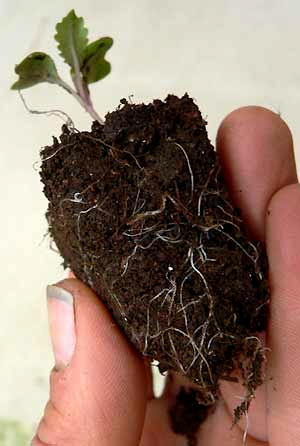
The first year the root sends up a shoot which sprouts to the dizzying height of six inches. Then it just sits there for the rest of the year. The second year it rises to about 2-3 feet. The third year it leaps close to its mature height. After that it grows in height and girth until mature and ready to be of use. What is happening? All the growth of the first two phases is happening where you can’t see it – the roots. The roots double in size each year. It is the amazing growth of the root system that makes the tremendous leap of the third year possible. As the roots grow they are better able to feed the growth of the canes. A relationship is created between the roots and leaves, feeding and nourishing each other for greater growth.(iv)Relating this analogy to the Phases of Learning, the first year of bamboo growth is Core Phase, the second is Love of Learning and the third is Scholar Phase. The symbiotic relationship of roots and leaves explains how Core and Love of Learning are never finished. They continue to nourish the later Phases and are fed by them in return. What would happen to a plant without its root system? What happens to roots if the plant fails to develop or the branches and leaves are all cut off?
You have probably heard the phrase “head, heart and hands.” In development it should read Hands, Heart and Head. It is through the roots — the hands and heart — that the head is reached. Abstract thinking begins between 12-14 years of age. At that point you can teach straight to the head; in the meantime, those abilities and avenues appear dormant. When you mentor the Core and Love of Learning phases it does not look like much is happening. If you want to see the growth that is taking place you will have to look deep below the surface to see and appreciate it. Building the root system is the foundation work of these phases. This creates the possibility for the tremendous growth of Scholar Phase and beyond.
Core Phase-Hands
The primary Core mentor skill is the ability to receive and act on impressions. A “mentor skill” is something to be utilized, modeled and taught. An important part of Core is knowing where and how to turn for guidance when facing overwhelming situations. Without it we accept tyrants and their false promises of security.The main lesson is Character. Learning the family moral code and religious values as guides to discerning the difference between true and false, good and bad, right and wrong and to choose what is right no matter the cost. These lessons do not end in Core phase, but it is certainly the best time to begin, the time to lay the proper foundation.
Each day we are made increasingly aware of the fact that life is more than science and mathematics, more than history and literature. There is need for another education, without which the substance of our secular learning may lead only to our destruction. I refer to the education of the heart, of the conscience, of the character, of the spirit – these indefinable aspects of our personalities which determine so certainly what we are and what we do in our relationships one with another. (G. B. Hinckley)
Core phase children learn primarily through their “hands” – their bodies and physical senses. They learn through interacting with their environment. They imitate what they see and hear. They taste and touch everything and anything. They love movement and rhythm – dancing and acting out stories. Learning is very “hands on” this is why Montessori and similar methods work so well. Core Phaser’s concept of time and space is limited to the here and now -– their immediate experiences and surroundings.The method is doing things together: work and play, love and home, stories and songs. These give opportunities for discussing good/bad, right/wrong, etc. Family relationships are the training ground to learn manners, negotiation, service and more.
The Core need is order–structure of time (routines) and space (environment). In general, those in Core Phase like knowing what to expect. This includes a daily rhythm of times for meals, reading, play and work, morning and bedtime routines, family rituals and traditions.
If you are having trouble with little ones being too active when you would like them doing quiet activities, such as while you read aloud or work with older children, consider structuring active time (especially outdoor) before quiet time. I once read an article in a women’s magazine reporting on some recent ADD research. The findings were that ADD kids who spent time outside running and playing were able to focus and pay attention to their work afterward. Many homeschool families report the same result whether it is work, play or exercise. A good Core kid is a tired Core kid.
The main skill to work on in Core actually complements (rather than competes with) character training; that skill is comprehension. Comprehension is the ability to understand, to grasp the meaning. Comprehension is built through hands-on experiences and discussion.
I have a friend who teaches high school math. When she teaches geometry she can tell which students have had hands-on experience with shapes – they are able to comprehend the material while the others struggle with the concepts.
The early years are the time to build up a catalogue of experiences. If you came across the letter combo, “D-O-G,” how great would be your understanding if you had never seen, touched, smelled or played with one?
One school district set up an experiment . . . Some kindergartners in the district received extensive instruction in reading. Others spent the same amount of time learning science. They melted ice. They observed thermometers in hot and cold places. They played with magnets, grew plants, learned about animal life, and so on. By third grade the “science” children were far ahead of the “reading” children in their reading scores. The reason? Their vocabularies and thinking skills were more advanced. They could read on more topics and understand higher level materials. . . . You can also teach about music, art, literature, money, work, safety, God, people, and everything else you and your child are interested in. All such teaching is “pre-reading” instruction. It is getting ready for reading. Everything your child learns increases his vocabulary and develops his thinking skills. (v)
There are many avenues of play that build comprehension and motor skills, such as:- drama
- drawing
- painting
- clay
- storytelling
- handwork
- lacing
- sewing
- mazes
- blocks
- puzzles
- sorting
- sand and water play
- bugs
- cooking
- gardening
Love of Learning – Heart
The primary Love of Learning mentoring skill is passion, enthusiasm and genuine interest in everything – particularly for trying new things. You model this skill by not only finding and exploring your own passions and interests but by enthusiastically sharing your and their interests.The main lesson of this phase is Confidence. During this phase there is a strong desire to do things “right”, to be successful at things, but underlying is the desire to successfully navigate life itself. This is why Love of Learners want to know “the rules.” A strong relationship with Dad is especially important in building confidence. The influence of Dad increases as they grow and move into Scholar Phase.
This phase is about their Heart, their feelings, their Love of learning. The main method is to add the Heart to the Hands. They continue to need hands-on activities but they become more purposeful now. In Core phase they imitate a general idea of what they see you do, in Love of Learning phase they notice the differences and they care.
No more scribbling; they want to learn how to really write. Same for other things such as reading, drawing, etc. They have the attention span and interest for lessons, projects and other skill-building activities. They begin to care about and comprehend other people, places and times (past and future) outside their own experience.
Love of Learning is a great time to explore the arts and sciences (including math), history and geography and to explore talents and abilities. As they are exposed to new things they find interests they want to investigate further and are enthusiastic about sharing them. They consider their interests as a part of themselves and they take our responses to those interests very personally.
They need models, positive feedback from you and academic freedom to choose. Their primary models are their parents and older siblings; but now the need may begin to expand. These years often include a search for heroes.
Emulating heroes is a way to learn and follow the rules for a successful life. Biographies of great men and women are appealing at this time because it meets this need for models to follow, and for the “rules” that govern the outcomes in life. A mentor who puts trust in their choices and helps them learn through positive feedback (specific and honest) helps them build confidence in themselves, even when things don’t always work out. Encourage them while keeping the following in mind:
- They like to do what they can do.
- They want to do what they think they can do.
- They hate to do what they can’t do. (v)
The skills learned in this phase are the basic life and academic skills. But the most important is trying new things. The new things can be books, sports, food, lessons, groups, etc. This does not mean making commitments, just trying. When I was attempting to transition my very visual son from picture books to chapter books all I asked was that he listen to the first chapter. At the end I asked if he wanted to hear more. I read a lot of first chapters until we found the one that worked for him.
Conclusion
In the Foundational Phases the work of the mentor is to facilitate positive, enjoyable experiences and opportunities to be and feel successful. The most important and enduring lessons of this time involve not as much what they know as what they feel about themselves and learning. The Love is the pilot, and the Learning the co-pilot in Love of Learning. Nurturing positive associations with subject matter will give the child the desire to go deeper and learn more. This, along with developmental preparedness, character, confidence and a sense of purpose helps them choose to make the leap of Scholar Phase.About 150 years ago, a religious community was determined to build a structure that would be dedicated to God and His work. With much time and labor they laid a foundation of sandstone, the most readily available material on hand. Shortly after completing the foundation work they covered it over and left it for a few years while they tended to more immediate needs. When the time came to continue the work they uncovered the stones and found them cracked.
This would never do. They intended to build something that would be strong enough to last for generations. They did the only thing they could do under the circumstances: they pulled the stones out and started over. This time they used better quality material — granite blocks — although it increased all costs including time and labor. The price was worth paying; the building still stands and fulfills its purpose generations later.
As we mentor our children we will make mistakes, but they can be corrected in them and ourselves. As adults and parents our work is to uncover the foundation and see if it is good enough to build the work of our lives upon, to carry us forward in the great purpose of our life. Is it the right foundation to help us become whom we are meant to be and to do what we were born to do?
Then comes the painful part: ripping out what is just not good enough and replacing it with a foundation that will last. It is definitely work. It is even more work if you have begun to build on it before recognizing its inadequacies. But the work and agonizing effort are worthwhile, because we are building to impact generations, and the generations of our families will impact others.
Endnotes:
i. Moore, Raymond and Dorothy, Better Late Than Early, (Camas, Washington: Reader’s Digest Press, 1975), p. 93.ii. Moore, The Successful Homeschool Family Handbook. (Nashville, Tennessee: Thomas Nelson, 1994), p. 62.
iii. Campbell, Ross, How to Really Love Your Child, (Colorado Springs, Colorado: Chariot Victor Publishing, 1992), pp. 95, 132, 134
iv. Bamboo Growth Habit, Mid Atlantic Bamboo
v. Beechick, Ruth, A Home Start in Reading, (Pollock Pines, California: Arrow Press, 1985), p. 4
v. Pudewa, Andrew, “Motivating Boys & Other Kids Who Would Rather Be Making Forts All Day,” Workshop Presentation on DVD or audio download, (www.excellenceinwriting.com)
vi. from “The Magic Schoolbus” series of books and television programs.
Note: Links to Amazon are provided for your convenience in researching suggested readings. Purchases made originating from these links result in TJEd.org receiving a commission, so when shopping amazon, we hope you’ll start here! Thanks so much for your support.
Thursday, January 19, 2012
Wonderful Books
I have found several series of books that I feel are wonderful tools for both Core and Love of Learning phases. I thought I'd share them here in case there's someone who's interested. I will cover these books over the next few posts.
I'll start with some wonderful Core Phase books...
The first I'd like to share, is actually an author. She has many different series available. The author is Jane B Moncure. I personally love her "classic/vintage" books, though I have a few of the more current, reprinted versions as well.
Here is her website http://www.janebelkmoncure.com/fsrsbbhome.htm
These are some of the series I'm personally collecting by Moncure...


I'll start with some wonderful Core Phase books...
The first I'd like to share, is actually an author. She has many different series available. The author is Jane B Moncure. I personally love her "classic/vintage" books, though I have a few of the more current, reprinted versions as well.
Here is her website http://www.janebelkmoncure.com/fsrsbbhome.htm
These are some of the series I'm personally collecting by Moncure...
My First Steps to Math
These books go over basic counting skills with cute little rhyming words and adorable illustrations. I personally, as I stated before, like the original, first print of these books. The later prints seem to lose a little something that I like about the books.
My First Steps to Reading

These are basic alphabet books with cute pics & rhymes.
Each book focuses on one letter of the alphabet.
Magic Castle Readers

These cute little books cover six different areas...
Language Arts, Social Science, Science, Creative Arts, Math, and Health-Safety.
Again, cute pics & rhymes.
Then there are the seasons books...
"Spring Is Here", "Summer Is Here", "Fall Is Here" and "Winter Is Here".
These books are AWESOME because Moncure teamed up with Frances Hook, the illustrator.
Frances Hook is one of my favorite artists!! I absolutely LOVE her work and would pay
a large sum to own one of her original works.

Awesome pics and basic "season" information.
Fun little questions that the kids can answer as they go along.
I'm sure there are other books written by Moncure that I will add to our "Learners" shelf. But as for now, I'm focusing on completing these four series.
I do want to recommend going to thrift stores to find these books because that's where I've found most of my "classic/vintage" books. And you can't beat $1.00 for a wonderful book to add to your family's library.
<3
Monday, December 26, 2011
Still Learning & Understanding...
Since A Thomas Jefferson Education has so many layers to it, I find myself on a daily basis understanding more and more about it. Slowly I'm beginning to see how it works and where I need to adjust our home.
Recently I've come to see that I am still being too "scheduled", too "structured". It's just so hard to come from a "conveyor belt" back ground and not do the "conveyor belt" methods! But I'm getting there...slow and steady! By the time the twins are in Love of Learning Stage, I'm hopeful I'll have it all figured out! :)
I'm starting to see the progress my children are making and I'm so pleased with that. And since I'm able to see their progress, I'm beginning to understand how simple things, like learning how to cook, to sew, to play with siblings, to play by yourself, to serve those around you, etc., etc., are all a major part of a wonderful Leadership Education! I'm beginning to see it's not all "book smarts", in fact, that's a very tiny part, it's more about being a well-rounded individual in all areas of our lives. It's more about understanding the past so that we can have a brighter future. It's more about finding joy within our home & family so that the world can't steal it from us. It's all about the "eternal perspective", not just the here-and now...not just the "no-child-left-behind"....not just the "test scores".
Ahhhhh...I'm getting it...I really am!! :)
I'm so so so grateful for this education in our home. I only wish I could find someone in our area who was instituting the same education in their home...but I'm still keeping my fingers crossed!!
<3
Recently I've come to see that I am still being too "scheduled", too "structured". It's just so hard to come from a "conveyor belt" back ground and not do the "conveyor belt" methods! But I'm getting there...slow and steady! By the time the twins are in Love of Learning Stage, I'm hopeful I'll have it all figured out! :)
I'm starting to see the progress my children are making and I'm so pleased with that. And since I'm able to see their progress, I'm beginning to understand how simple things, like learning how to cook, to sew, to play with siblings, to play by yourself, to serve those around you, etc., etc., are all a major part of a wonderful Leadership Education! I'm beginning to see it's not all "book smarts", in fact, that's a very tiny part, it's more about being a well-rounded individual in all areas of our lives. It's more about understanding the past so that we can have a brighter future. It's more about finding joy within our home & family so that the world can't steal it from us. It's all about the "eternal perspective", not just the here-and now...not just the "no-child-left-behind"....not just the "test scores".
Ahhhhh...I'm getting it...I really am!! :)
I'm so so so grateful for this education in our home. I only wish I could find someone in our area who was instituting the same education in their home...but I'm still keeping my fingers crossed!!
<3
Saturday, November 5, 2011
Wonderful Blog Post abt TJEd...
This is a wonderful blog post about an LDS mother who has been using TJEd in her home for the last 10yrs! If you want to see another mother's point of view...check it out! :)
http://www.latter-dayhomeschooling.com/2011/11/what-is-thomas-jefferson-education.html
<3
http://www.latter-dayhomeschooling.com/2011/11/what-is-thomas-jefferson-education.html
<3
Saturday, October 29, 2011
The "Learners Closet"
One of the important tools in a TJEd family is the closet. In our home, we call it the "Learners Closet".
The special closet should be located within the family room area, if possible. Ours is just outside of our family room by a couple feet so it's still extremely convenient for the kids to access it. The items in the closet should be sorted by "phases". The Core Phase items should be on the lowest shelves and the Love of Learning Phase items should be on the upper shelves. That way the Core kids somewhat look forward to being "big enough" to get into the Love of Learning stuff as they stare at the higher shelves.
The closet should be filled with tons of educational toys/games and should only be accessed during "learning hours", which in our house is 10am-4pm. At four o'clock, the door is closed and the items within it are, for the most part, off limits. It keeps the items within the closet as "things to look forward to", which then helps the kids not to lose interest in them.
Some of the items in our Learners Closet are...
Core Phase: different types of blocks, Legos, puzzles, Leap Pad, animals, foods, tent, learning games...lots & lots of items for imaginary play!
Love of Learning Phase: Love of Learners can use any item from Core Phase along with additional learning games (Monopoly, Boggle, Which Way USA, etc), flash cards, white boards, educational puzzles, WrapUps, play money, arts, crafts, math items, etc.
Here's a picture of our current "Learners Closet"...

It's not fully finished yet but I keep finding wonderful things to add to it. I believe within the next year, I should have it where I'd like it. I'd like to have things such as....Lincoln Logs, more educational games, a "vehicles" tub, a "puppets" tub, and Tinker Toys (hopefully Santa will bring some of these items). In the perfect world, I'll also get that top shelf cleaned off and have that level full of Love of Learner's stuff as well!! I can't wait!!
<3
The special closet should be located within the family room area, if possible. Ours is just outside of our family room by a couple feet so it's still extremely convenient for the kids to access it. The items in the closet should be sorted by "phases". The Core Phase items should be on the lowest shelves and the Love of Learning Phase items should be on the upper shelves. That way the Core kids somewhat look forward to being "big enough" to get into the Love of Learning stuff as they stare at the higher shelves.
The closet should be filled with tons of educational toys/games and should only be accessed during "learning hours", which in our house is 10am-4pm. At four o'clock, the door is closed and the items within it are, for the most part, off limits. It keeps the items within the closet as "things to look forward to", which then helps the kids not to lose interest in them.
Some of the items in our Learners Closet are...
Core Phase: different types of blocks, Legos, puzzles, Leap Pad, animals, foods, tent, learning games...lots & lots of items for imaginary play!
Love of Learning Phase: Love of Learners can use any item from Core Phase along with additional learning games (Monopoly, Boggle, Which Way USA, etc), flash cards, white boards, educational puzzles, WrapUps, play money, arts, crafts, math items, etc.
Here's a picture of our current "Learners Closet"...

It's not fully finished yet but I keep finding wonderful things to add to it. I believe within the next year, I should have it where I'd like it. I'd like to have things such as....Lincoln Logs, more educational games, a "vehicles" tub, a "puppets" tub, and Tinker Toys (hopefully Santa will bring some of these items). In the perfect world, I'll also get that top shelf cleaned off and have that level full of Love of Learner's stuff as well!! I can't wait!!
<3
Thursday, October 27, 2011
Let's Read and Find Out Science
One of the best things I've came across by borrowing books from the local library is the "Let's Read and Find Out" science books. They come in levels 1 & 2 and are filled with lots of facts and fun experiments.
I initially had borrowed the "Volcanoes" book from this series from the library. I decided after reading it the first time that I wanted my own copy for our "Learners Book Shelf". I went on Amazon, of course, and found that there are MANY MANY books in this series!!

I ended up purchasing lots of these wonderful books instead of just the one I had initially went on there for. I did stay with the same author, which was Franklyn M Branley, but the series has several other authors. Now that we have all of Branley's books, I'm going to be branching out into the others.
I absolutely love how they use basic words and phrases to explain not so basic subjects. Both Hannah and Gabe love listening to me read these books. And my favorite part are the simple, fun experiments we can do directly after reading the book. I love to see the "ah-ha" moments on their faces as they connect what I had just read to what they're currently seeing. The "Oh I get it" look appears on their faces!! Priceless!!
Needless to say, the kids will be getting several more of these for Chirstmas. I highly recommend these to EVERY mother out there...whether you're a homeschool family or not, these should be on your families book shelf!!
Check them out...you won't regret it!!!
<3
I initially had borrowed the "Volcanoes" book from this series from the library. I decided after reading it the first time that I wanted my own copy for our "Learners Book Shelf". I went on Amazon, of course, and found that there are MANY MANY books in this series!!

I ended up purchasing lots of these wonderful books instead of just the one I had initially went on there for. I did stay with the same author, which was Franklyn M Branley, but the series has several other authors. Now that we have all of Branley's books, I'm going to be branching out into the others.
I absolutely love how they use basic words and phrases to explain not so basic subjects. Both Hannah and Gabe love listening to me read these books. And my favorite part are the simple, fun experiments we can do directly after reading the book. I love to see the "ah-ha" moments on their faces as they connect what I had just read to what they're currently seeing. The "Oh I get it" look appears on their faces!! Priceless!!
Needless to say, the kids will be getting several more of these for Chirstmas. I highly recommend these to EVERY mother out there...whether you're a homeschool family or not, these should be on your families book shelf!!
Check them out...you won't regret it!!!
<3
Subscribe to:
Posts (Atom)